If you have ever sat down with a French text and a cup of café, you’ve likely encountered the "Visual Puzzle." You look at a word like eaux (waters) and realize (with a mix of wonder and perhaps a little frustration) that those four letters are all pronounced like a single English "O."
Welcome to the world of French orthography. At Alliance Française Silicon Valley, we often see our students’ eyes widen when they realize that in French, what you see is often more than what you hear. But don't let the silent letters intimidate you. Once you understand the "why" and the "how," these silent characters become helpful signposts on your journey to mastering French pronunciation.
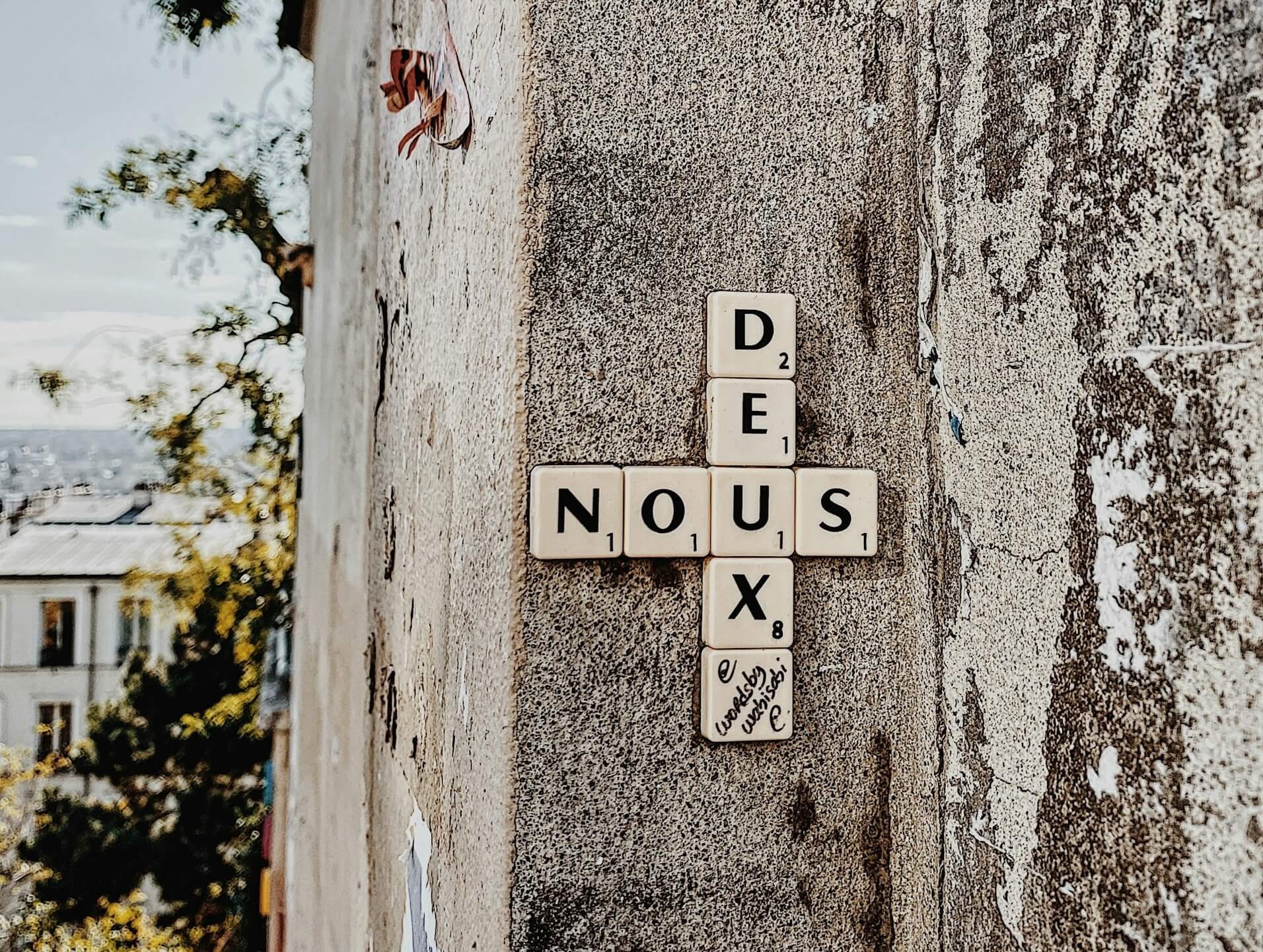
In English, we expect every letter to do some heavy lifting. In French, letters often exist for reasons beyond sound: they signal grammar (like the 's' for plural), denote history (reflecting the word's Latin roots), or even change the sound of the vowel that comes before them.
While it feels like a secret code at first, there are two primary "rules of thumb" that will instantly improve your reading fluency.
For most French words, the consonants at the very end are usually silent. If you see these six letters at the end of a word, your default should be to leave them unpronounced: D, P, S, T, X, and Z.
| Letter | Word | Pronunciation Tip |
| D | Tard (Late) | The 'd' disappears; sounds like Tar. |
| P | Trop (Too much) | The 'p' is silent; sounds like Troh. |
| S | Paris | The 's' is silent; sounds like Pa-ree. |
| T | Salut (Hi) | The 't' is silent; sounds like Sa-lü. |
| X | Heureux (Happy) | The 'x' is silent; sounds like Uh-ruh. |
| Z | Nez (Nose) | The 'z' is silent; sounds like Nay. |
A Note on Grammar: Even though we don't hear the 's' in les amis or the 't' in petit, these letters
are vital for writing. They tell us if a word is plural or masculine. This is why our private lessons focus so heavily on the
connection between the written and spoken word.
Of course, French wouldn't be the poetic language it is without a few exceptions! To remember which consonants are usually pronounced at the end of a word, language experts use the helpful mnemonic: CAREFUL.
If a word ends in the consonants found in the word "Careful" (C, R, F, or L) you generally do pronounce them.
Watch out for the letter 'R' when it follows an 'E' at the end of a verb (the infinitive form). In words like manger (to eat) or parler (to speak), the 'R' remains silent, and the 'ER' sounds like a crisp "é."
Understanding these silent letters is the key to achieving that smooth, melodic flow known as le rythme français. When you stop trying to pronounce every letter, the language begins to glide.
At AFSV, we pair these technical rules with cultural immersion. Whether you are attending one of our cultural workshops or engaging in a group discussion, hearing these "silent" rules applied in real-time conversation is the fastest way to build your confidence.
Most silent letters are "etymological," meaning they reflect the word's history. For example, the 's' in île (island) was once pronounced but eventually disappeared, leaving behind a circumflex accent (ˆ) as a "tombstone" for the missing letter.
Yes, French loves exceptions! For instance, the 'L' is silent in fusil (rifle) and outil (tool). However, for 90% of the words you encounter, the CAREFUL rule will serve you perfectly.
Sometimes! In words like bus, fils (son), and ours (bear), the 's' is pronounced. These are usually words borrowed from other languages or specific exceptions that you'll learn as you progress through our French levels.
Reading aloud while listening to an audiobook is the best way. Follow the text with your eyes while your ears register which letters the narrator "ignores." You can find great audio resources on our blog's media recommendation page.
Tuesdays 2-6pm
Thursdays 10am-2pm
Saturdays 10am-12pm
Alliance Française Silicon Valley
Los Gatos, CA 95032

Leave a Comment