When late autumn sweeps across the Bay Area, the atmospheric change is immediate. The cool evening fog rolls over the Santa Cruz Mountains, dusk arrives earlier in Palo Alto and San Jose, and the urge to step outside gives way to the sanctuary of home.
In France, this seasonal retreat has its own modern name: le cocooning.
While the French language enthusiastically borrowed the word from English, French culture transformed the concept entirely. For Anglo-American culture, "cocooning" often conjures solitary Netflix binges and takeout boxes on the couch.
In France, however, le cocooning revolves around culinary craft, warmth, and the dining table. It is about dimming the lights, opening a bottle of medium-bodied red, filling the apartment with the intoxicating aroma of slow-simmered dishes, and spending hours around a table with good company.
At Alliance Française Silicon Valley, we know that French grammar is only half the language, the rest is lived through food and culture. Here is your guide to bringing the art of French comfort cooking into your autumn kitchen, complete with essential culinary vocabulary to expand your repertoire.
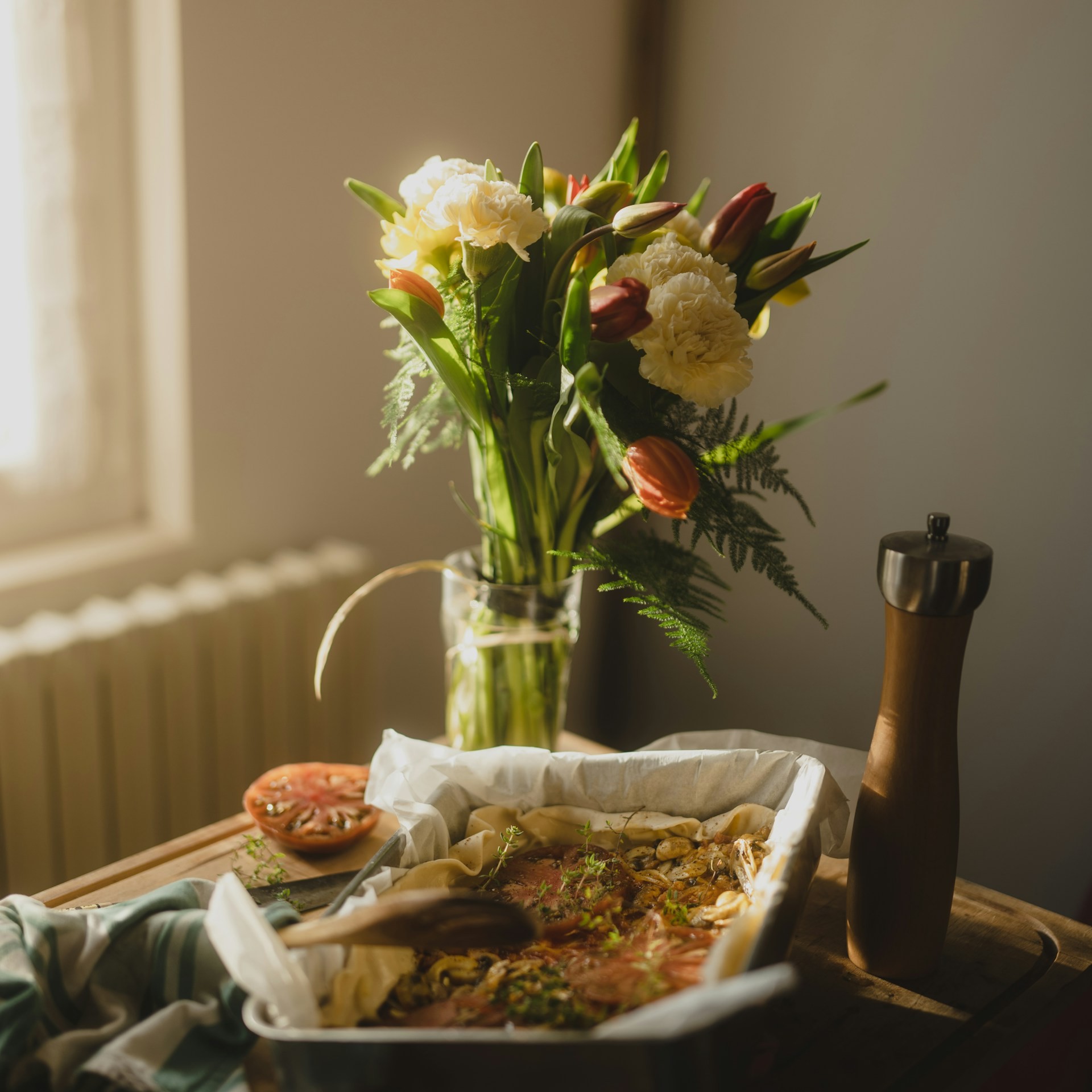
You don’t need the classical rigor of an étoilé chef to recreate authentic French comfort. These three autumn staples require modest technique, simple seasonal ingredients, and a little patience.
Forget generic pumpkin spice; the undisputed king of the French autumn vegetable stand is the potimarron (red kuri squash). Shaped like a small teardrop pumpkin, it boasts a sweet, distinct roasted-chestnut flavor.
Originating from the historic Dauphiné province in southeastern France, this legendary potato dish is often butchered outside the Hexagon with shredded cheddar, bacon, or heavy flour roux.
Long before it became a staple on international brasserie menus, French onion soup was humble peasant fare and late-night sustenance for workers at Les Halles, the historic central food market of Paris.
Understanding French cooking techniques starts with the verbs that dictate time and temperature:
| French Verb | Pronunciation | Culinary Meaning & Context |
| Mijoter | [mee-zhoh-tay] | To simmer gently over low heat for an extended period. The hallmark of autumn braises, stews, and soups. |
| Éplucher | [ay-ploo-shay] | To peel the skin from fruits or vegetables using a knife or peeler (un économe). |
| Dorer | [doh-ray] | To brown food in a pan, or to brush pastry with egg yolk to give it a rich golden color in the oven. |
| Faire revenir | [fehr reh-veh-neer] | To quickly sauté or sweat ingredients (like onions or lardons) in fat until translucent or lightly colored before adding liquid. |
| Enfourner | [ahn-foor-nay] | To slide a prepared dish or bread loaf into a preheated oven. |
In French households, the dining table is sacred ground. You don't eat standing by the counter, and you don't scroll through social media during dinner. Le cocooning is about presence.
Cooking is one of the most natural, multisensory ways to build vocabulary. When you associate words with physical actions (chopping, simmering, tasting) the language sticks.
To deepen your culinary appreciation, explore the food-centric programming on TV5MONDE+, accessible on demand through our partnership at AFSV. Shows like Épicerie Fine and culinary regional documentaries take you straight to the farms, cellars, and artisanal kitchens where French gastronomic traditions thrive. For official information on certified French regional food traditions and agricultural labels, the Institut National de l'Origine et de la Qualité (INAO) remains the primary authority for authentic designations.
Ready to step away from the textbook and test your skills in real life? Keep an eye on our upcoming AFSV Cooking Workshops and Culinary Events, where we blend hands-on regional cooking with active French conversation. And to ensure your vocabulary is ready for your next culinary adventure, explore our upcoming French classes or schedule focused private lessons.
While you can use butternut squash or sugar pie pumpkin, the texture and flavor will differ. Traditional American carving pumpkins are stringy and watery. Butternut squash provides a similar smooth texture, but lacks the distinctive nutty, chestnut-like finish of authentic French potimarron.
Historically known as "the soup of the poor," it was inexpensive, hearty, and warming. Today, its combination of deeply caramelized sweet onions, savory broth, and bubbling, melted alpine cheese makes it the archetypal comfort dish for cold, rainy days.
Rich dishes like gratin dauphinois pair beautifully with crisp, acidic whites from the Jura or Savoie, or a medium-bodied red from the Loire Valley (like a Cabernet Franc from Chinon). For soups and squash dishes, a dry, mineral-driven white like an unoaked Chardonnay (Chablis) or a Viognier works wonders.

Leave a Comment